Welcome!

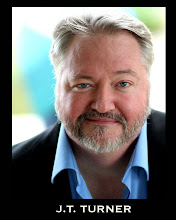
This blog serves to give acting ideas and advice to actors of all ages, especially young ones. This blogs author is J.T. Turner, actor, director, teacher and member of AEA, SAG and AFTRA. I hope you find the posts useful, and please pass along the blog address to anyone you think might benefit from it!

Friday, April 1, 2011

Some Inspiration

Several years ago I befriended a Writer/Illustrator on Livejournal. We shared a lot of passions; comic books, Tolkien, Captain Sir Richard Francis Burton, C. S. Lewis, dietCoke. James A.Owen has had a remarkable life and career, and is perhaps best known for his series of books called The Chronicles of the Imaginarium Geographica, which started with the best seller Here There Be Dragons. Ok so why am I mentioning that in an acting blog?


I have written several times about inspiration. Inspiration is a muse that needs to be fed constantly. Especially as performers, we must try constantly to stay in the positive creative zone that makes our work great, and puts us at our best. I preach staying in that zone by surrounding yourself with good people, watching great plays and movies, and reading inspiring books.


James has released a downloadable book, simple format, way underpriced, where he relates a bit of his life and philosophy. It is a fast read, and a compelling one you will feel driven to complete. The work is; Drawing The Dragons; A Meditation on Art, Destiny and the Power of Choice. It is a great piece, and I recommend it to all of you. I also recommend you share it with any High Schooler, or Middle Schooler you know. It is great for adults, don't get me wrong, but so inspiring I want kids  to read it as well. The link is below:


http://coppervale-press-digital-books.fetchapp.com/sell/uqueinoo


Cheers!


J.T. Turner
The Actors Sensei

Wednesday, March 9, 2011

Memorizing by hand


We spend many blog posts here at Advice to the Players talking about memory. A good memory can help an actor immensely. Whether it be a monologue for an audition or memorizing lines for a performance, memory plays a major role in a successful acting career.

Today I want to mention a technique used by some actors to help them memorize. They simply hand write out the lines they are trying to memorize. Not a sophisticated method, in fact it is very low tech and simple, but many actors swear by this method.There seems to be a great connection between the physical act of writing out a part and memorizing it. Perhaps it is because we need extra concentration as we write, or because it requires multiple paths of your brain being used (sight, tactile).

No special equipment is needed, and your penmanship doesn't seem to make any difference. So try writing out the piece you are working on by hand. No typing please, handwriting seems to work best in the process. It also slows you down to concentrate on the work, and perhaps you will discover something in the line as you write it that you have not considered before.


J.T. TURNER
The Actors Sensei
Coaching in acting and speech for all ages, all media.

Monday, February 21, 2011

TODAY: TEN TIMELY TIPS

Hello loyal readers! Today at Advice to the Players, some fast tips for actors of all ages. Hope you will enjoy them. Several of these have been used as blog posts all their own, just check the site.
  • Act! All you can! Professional lessons are great, but, and I say this as an acting teacher, actual onstage time is better. Get all you can, especially in your early days.
  • Be a professional, even as an amateur. Show up on time, and ready to work. Script in hand if needed, pencil at the ready.
  • The script is your foundation. Learn your lines, then play with the underlying text.The sooner you can get them into memory, the sooner you can free up your brain to explore what you are saying.
  • BREATH! At least 15-20 minutes a day of proper breathing, especially on show days especially just before a show, will do wonders for you.
  • Save the drama for on stage. Avoid getting into backstage and offstage drama.
  • Try not to bad mouth fellow actors. It is a small business in many ways, and your words will come back to haunt you.
  • Remember to listen on stage. Focus, be an active listener, not just an actor waiting for a cue.
  • Try not to take rejection from a role as a personal comment/.You just don't fit into one persons vision. Move ahead to the next audition.
  • Show up. Life is filled with success, if you show up.
  • Be nice. To fellow actors, stagehands, techies, staff, audience everyone. It makes you a better actor and a better person.
Remember to become a follower here, or on our Facbook link, http://www.facebook.com/JTTurner#!/group.php?gid=220821066628


J.T. Turner
The Actors Sensei
Acting and Speech Lessons for all Ages
jtturneractor@gmail.com

Wednesday, January 26, 2011

Why are you still here?

 thought-cloud-follow-your-


Why are you still here? No, no I don't mean why are you reading my blog, any sane person knows that you should always do that. Rather I would like you to think about that question from the perspective of an actor.Why is your character still on stage?

I often remind actors you always need a reason to come on stage. You are drawn in by the sound of a song, you want to have a conversation with someone, you need to borrow money, or you have a message to deliver. You should always have a reason for actively coming on the stage. But I also want you to consider, as a performer, why you stay. Why don't you leave? Your character should have a reason for being on the stage, and that reason should be more than, "The director put me here".


I always admonish my students to never come on stage just because they were told to. And I want to remind you all that you also need a reason to stay. Perhaps your character is interested in what another character is saying. Or you have more to say and are just waiting for a chance to say it. Or you have no where else to go, so decide to stay around. Whatever the reason, use that reason in your character, make it an active choice. But do not let the reason be, "I am here, waiting to say my next line". That makes you a prop, not an actor!


                                                    THE ACTORS SENSEI
                               Coaching in acting and public speaking, monologue/audition work.

Wednesday, January 19, 2011

Take this Viral!

I WOULD LOVE THIS POST TO GO VIRAL!
As you know this is an acting and performing blog. Advice from sagely, ancient me to actors, dancers, singers, speakers, musicians  and performers of all ages. But many of my readers are parents of performers, performers with kids, or kids themselves.

The publication of a new book by Amy Chua called The Battle Hymn of the Tiger Mother has caused quite a stir among parents. Ms. Chua gives the jist of her book in a recent Wall Street Journal article entitled "Why Chinese Mothers Are Superior". In it she mentions how she raised her own children, a regime that included the following formula for success; her girls were never allowed to:

• attend a sleepover
• have a playdate
• be in a school play
• complain about not being in a school play
• watch TV or play computer games
• choose their own extracurricular activities
• get any grade less than an A
• not be the No. 1 student in every subject except gym and drama
• play any instrument other than the piano or violin
• not play the piano or violin.

If you know me and my work with kids, you know i might have a thing or two to say about that. I want, instead of replying myself, to reproduce a reply by Ilyon Woo. I had the honor to work with Ilyon on a dramatic reading of her recent book. Her official credentials are: Ilyon Woo is the author of The Great Divorce: A Nineteenth-Century Mother’s Extraordinary Fight Against Her Husband, the Shakers, and Her Times (Atlantic Monthly Press).  She holds a Ph.D. in English from Columbia University and a B.A. in the Humanities from Yale College. Visit her website, www.ilyonwoo.com. Here is her article:


AN ASIAN FATHERS GIFT, PERMISSION TO FAIL


In high school I was a high-scoring, piano-performing, Asian- American “A” student, bound for the Ivy League—by way of failure, not success.
I did not always fit the type.  In early high school, I was a “B” student, with one steady A-minus in English, not math.  In fact, math was my worst subject. In ninth-grade algebra, I regularly came home with Cs and even Ds.  It was not for the lack of trying.  I labored over the assignments and logged many hours preparing for tests.  I yearned to see the equations unravel neatly before me, the Xs and Ys bouncing about frantically on either side of the equal sign, until at last the jumble of numbers and letters settled smoothly into clear numerical values for X and Y. I cared intensely about math, as I did about almost everything—too much, my mother sometimes observed, not without sympathy.  But somehow, those elegantly cascading equations never manifested before me, and more often than not, I was left in tears.
My math teacher, a popular man, seemed to find my questions amusing. “Have two glasses of wine and call me in the morning,” he would say with a dismissive wave, to the pleasure of the other students in the class. I learned to keep my questions to myself, or to save them for after class.
Fortunately, I had much better support at home. This was the 1980s, when “Asian-American Whiz Kids” made the cover of Time Magazine. Asian-American parents were gaining notoriety as disciplinary task masters. My own parents, however, defied these stereotypes.
In postwar Korea, my father was pushed by his own parents to become a doctor.  But he could not bring himself to dissect a cow, and though his family’s fortunes were riding on him, he quit medical school to become an architect.  My mother was a piano prodigy who first soloed with an orchestra at age 11 and performed at Carnegie Hall at 17.  Far from pushing me to play the piano, she actively discouraged it, and when she finally relented, found a teacher other than herself to supervise me.  My parents’ reaction as I struggled with algebra was not to tell me they knew I could do better, but to encourage me to look more broadly at things, and to listen hard to what I had to say.
I survived algebra with a C-plus, but I was scarred enough by the experience that I insisted on taking a summer math class to prepare myself for pre-calculus the following year.  That I had a better teacher did not seem to matter: Letters and numbers stuck together stubbornly and refused to be solved.  Very quickly I despaired, until my father jolted me with a question.
“What would happen,” he asked me quietly, “if you failed?”
I had no words to answer: “I’d… get a bad grade,” I stammered.  And then what?  My transcript would be ruined, I would not get into college?
My father shrugged. “So what? Is that the end of the world?”
My father has seen a lot in life.  He fled North Korea as a child and survived the Korean War.  At age 12 he left home to study, boarding with other families and, later, supporting himself as a tutor.  He immigrated to the U.S. with nothing. His gaze reflects the breadth of his experience: bright, direct and compassionate. By nature, he is a prankster and loves a joke, but I knew in this moment that he was absolutely serious. Then mischief set in.
“Why don’t you try it?” He dared.
I didn’t understand.
“Why don’t you try and fail?”
In that moment, though I would not realize it until later, my father set me free. It had simply never occurred to me that it would be OK not to do well.  My caring about a subject had become entwined with the desire to master it—as tangled as the equations that I could not solve—and finally, as the variables fell to either side of the equal sign, the problem resolved itself.
I failed that class—or got a D, I honestly can’t remember.  My father was right, it was not the the end of the world.  And it’s with that failure, when I stopped trying so hard and caring too much, that my grades began to soar—all of them, including math.
Twenty years later, I am certain that had my parents reacted differently, had they extorted or threatened me or told me that they were ashamed of my poor performance, I would have been crushed.  In the years to come, as I attended one Ivy League university and taught at another, I came to know too many students who had been scarred by this kind of parenting.  Fortunately, I had the opportunity to pass on my father’s wisdom, anecdotally, at least.
When I was a graduate student, teaching undergraduate writing and literature, I had many students come to my office hours.  A number of them were Asian-American. They came to me because they had never had an Asian teacher before and were curious, and because they felt that I understood where they were coming from and the kinds of pressures they faced, especially parental ones.
I spoke to some of these students about my father’s words about failure.  One of them marveled, “Wow, my dad would never in a million years say that to me,” shaking his head and dismissing the possibility.  But I could see that the message got through, and that he, too, felt a bit more free. (REPRINTED WITH PERMISSION FROM ILYON WOO).

The theater is often a place where people find acceptance, and often, a family. It is sad that for the sake of a guaranteed paycheck, you would forfeit a childs opportunity to grow, explore, and thrive perhaps at something that speaks to them in thier soul. Who knows what opportunities and dreams would be missed under Amy Chua's method of parenting. Of course discipline is important, structure is important, but as in all things moderation.

Feel free to pass this around!


                                                    THE ACTORS SENSEI

Monday, January 17, 2011

Advice to the Players Goes to the Movies!


Yes I go to the movies and you should too. All performers should make it a habit to attend works within the arts, movies, plays, concerts  art shows and more. Often, as a professional actor, I am challenged with getting to shows, as often I am in one myself and don't get a chance to see friends at work. But this year, as a part of my goals, I am going to see more art. Plays and musicals, but movies as well.

As a member of the Screen Actors Guild, I am fortunate to get to see films that are nominated for the SAG awards held in late January. One of the perks of being a Union member is I see films that are up for awards. These are sent to me in a few ways, "screeners" which is an actual DVD of the movie, often long before it is out on DVD, downloads on iTunes, which is new this year but seems to be a trend, and something called "Movie Cash" which is a voucher to go see a movie in a theater for free. All this great access to amazing acting on film reminds me of my work, and inspires me in my work.

Black Swan Synopsis: Nina is aWatching other actors act, seeing the choices they make, looking at how they approach a role is a great lesson for actors. And it makes good fodder for future use. Watching Natalie Portman's amazing performance in Black Swan is riveting, and could be an object lesson for what madness looks like. Could you use that sometime, perhaps as Ophelia or as Queen Margaret? Can Colin Firth's take on King George VI's stammering, his insecurity, his internal struggle feed your portrayal of Willie Loman or Claudius?

When cast in a role, I often watch films that are set in the same time frame, or by the same author, or in the same country or with the same accents. I don't copy other performances, I let my own talents use them as a springboard to where my character may go. I draw this personal way of attacking a role from the great actor Antony Sher, who will watch films, TV shows, make sketches, read books and do research to flesh out his characters. (His book, Year of the King, is one I re-read each year).

So fire up that DVD player, get some popcorn, and feast! Oh and sometimes go to the movies, in a movie theater. It is different experiencing work in a communal setting, a ritual in itself.

See you at the flickers. :)


                     THE ACTORS SENSEI

Monday, January 3, 2011

A pen, a pen, my Kingdom for a pen!

Happy New Year to all you readers of Advice to the Players! As we start off 2011, I know many of you are making resolutions and gearing up goals for the new year. If you are like me, you set Dreams/Goals, (my dreams are my goals and vice versa), and I try to make sure they all come true. Amazingly a high percentage do.

But as we are prepping to start new ways of living, I want to make a suggestion to all actors, speakers, dancers and performers.Simply, write more.

Interesting studies tell us that a great way to get the creative juices flowing and keep them going is to write. Ideally a bit of writing each and every day. In THE ARTISTS WAY we read that a daily dose of writing, 3 pages of even nonsensical stream of consciousness writing, does wonders for the creative mind. It gets your brain perked up an flowing. This should be by hand, as this seems to do the most good, physically journaling. But hey typing works too for you high tech readers.

Oh but wait, here is another suggestion. Many of us carry around grudges for years, someone slights us and we get and stay, angry. Now we know the most effective way to get over it is to write the incident out, and then write out how you feel. This actually lets us move on more quickly than talking it out or even therapy sessions.

But let me add another layer to these two great ideas, and tell you that one of the things you should write about each day, (despite it being OK to just go stream of thought), is to write three things that you are grateful for. This simple act, jotting down 3 things you are happy to have in your life, will actually improve your day, and keep you in a better overall mood. Because when you are grumpy, no on, no one, no one likes you. Not even you.

I should mention that as an actor, I do keep a journal of my roles, what I am playing how I feel about the show, ideas for characters etc. I am far from perfect in this, many times I skip a month or more, but I still try. And I am glad to have something to go back to that reminds me of how I attacked a role or what crazy things happened at rehearsal.

So start trying to journal in some way each day. Remember it takes 6 weeks to make a habit, so get going now while you are motivated.

J.T. Turner, The Actors Sensei