Welcome!

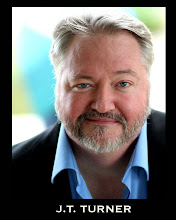
This blog serves to give acting ideas and advice to actors of all ages, especially young ones. This blogs author is J.T. Turner, actor, director, teacher and member of AEA, SAG and AFTRA. I hope you find the posts useful, and please pass along the blog address to anyone you think might benefit from it!
Showing posts with label tips. Show all posts

Sunday, October 16, 2011

Someone is watching


A few years ago, I was in a production of a musical in Boston. I was in the green room during a moment when I wasn't on stage and the actor next to me said, 'Oh X, (not her real name), must have people in the audience tonight". "How do you know?" I asked. "Oh she always cranks it up when she has friends out front".


I was a bit stunned at that, and it got me thinking about performance. Of course, when we know that family or friends are out front, we all tend to be a bit more excited and want to do our best. But as an actor, or singer or speaker, isn't the proper way to behave  giving your best ALWAYS? I think we have all seen actors that react to having someone special in the audience, a bit more fire, passion, a twinkle to the eye. But isn't the real challenge for us to keep that level of performance at each and every show? Of course there will be variation, of course some shows will turn out better than others, but that should be in hindsight, not a decision made before you go on!


Because the truth is that someone is always watching you. Someone always wants you to take them on a journey, to move them, to entertain them. When I teach young actors, I always remind them that they must treat each moment onstage as though someone is watching them, hanging on their every word, rooting for them. And that is good advice for all ages, to treat each show as though someone special is out there watching.


When I was on tour with a show years ago, I had a rough show. I was tired, my timing was off, and i just felt less than 100%. When the show was over and I was leaving, a parent wheeled a child up to me in a wheelchair, a child who obviously had a lot of physical challenges.From his wheelchair, the child told me, "You are my favorite actor". I was floored. I wanted to go back and redo the show, because I felt I had been under par. Yet my work had still touched this child.


 I never have forgotten that moment. I often replay it in my mind, to keep me going when I am feeling tired or off in some way. Going into the lights of a stage is a tremendous responsibility, and we don't know how many lives we can touch and change by our work.


So treat each performance as though someone special is watching. Because, someone is.


                                    THE ACTOR'S SENSEI

Wednesday, March 9, 2011

Memorizing by hand


We spend many blog posts here at Advice to the Players talking about memory. A good memory can help an actor immensely. Whether it be a monologue for an audition or memorizing lines for a performance, memory plays a major role in a successful acting career.

Today I want to mention a technique used by some actors to help them memorize. They simply hand write out the lines they are trying to memorize. Not a sophisticated method, in fact it is very low tech and simple, but many actors swear by this method.There seems to be a great connection between the physical act of writing out a part and memorizing it. Perhaps it is because we need extra concentration as we write, or because it requires multiple paths of your brain being used (sight, tactile).

No special equipment is needed, and your penmanship doesn't seem to make any difference. So try writing out the piece you are working on by hand. No typing please, handwriting seems to work best in the process. It also slows you down to concentrate on the work, and perhaps you will discover something in the line as you write it that you have not considered before.


J.T. TURNER
The Actors Sensei
Coaching in acting and speech for all ages, all media.

Thursday, September 30, 2010

Pinky!

No, no not a post about your last finger. Even I am not that crazy.......well not today anyway. No, rather this is a personal post about an odd actory thing I often do when learning lines, and that is using my secret weapon.......the Pinky.
Pinky Ball


Yes, that pink colored rubber ball that many of us had as children. Ok maybe for some of you it is a toy your folks used, but still just refer to the photo. So I actual use this simple device when trying to learn lines, especially Shakespeare. But it helps with all lines from any genre. it can also be used for lyrics.


Now work with me here. When learning lines, I simply bounce the ball along with saying the lines aloud. This works great for Shakespearean verse since it is written in specific beats. a typical line of verse has 5 soft and 5 hard beats, alternating...da-DUM-da-DUM-da-DUM-da-DUM-da-DUM. That is a typical line, so I may bounce the ball down on the hard beats.


But this works for any lines. It has to do with distracting your mind, and slipping your lines into your brain in a structured way. It really helps if you have a word that is hard or that you have trouble remembering. Then I FIERCELY bounce the ball while calling out the word several times. By over emphasizing, exaggerating, and making a strong memory path, the word gets into your brain more dynamically, and that helps you with recall.


If I am working on a scene with a partner, we bounce the ball to each other after each one is done with a line. If I am getting help from someone reading, I may just bounce it on the floor after my line, listening to the next cue.


I find it also helps if I am walking or pacing as I bounce the pinky, again, saying the lines aloud. You may recall an earlier blog about memorization, using an MP3 or the like, and that method is still great. But I alternate it with Pinky work, as it is a bit more physical, and fun. :)


(Oh and in a total nerd rush, I use a different ball for each show, and write the show on character on it. Then after, give it away. )


J.T. Turner
The Actors Sensei

Sunday, February 7, 2010

Do Your Homework!


     You may recall in my last Blog post, I mentioned a favorite book of mine called Year of the King, by Antony Sher. I love this book, re-read it annually, and think it one of the best books on an actors journey to the stage. I had the honor of seeing Mr. Sher on stage in London years ago, and found him riveting.When his production of Primo came to New York a few years ago, I was there to watch a master ply his trade. He appears in several films, including playing the doctor in Shakespeare In Love, but the screen only gives you a hint of his brilliance.

There are two things I want to pass on to you that I have learned from Mr. Sher.One is his research. When he was cast as the hunchback, Richard III, he went to various doctors, hospitals and clinics, learning all he could about "hunchbacks". What causes the deformity, how do people move with it. He also studied famous murderers, since in the Shakespeare play Richard is a murderer. (He was not a murderer in real life, and as a card carrying member of the Richard the III Society, I am quick to say Shakespeare was writing brilliant fiction in his work). Sher read about murderers, watched movies about them and got a sense of them, seeing what he could use on stage. He also watched movies and videos about predators, sharks, lions, tigers, since Richard is portrayed as a predator, and read about spiders, as Richard is called one. And, as an artist, he kept a sketch book about the things he saw.

My point here is that he looked at the character, and did homework about how to portray him. If you are in a light, fluffy community theater musical maybe you won't need research to the extent Sher does it. But when you are in a drama, period piece, classic play, his style may be of great benefit to you in creating a role. I was cast as Dr. Carrasco in Man of LaMancha years ago. He is a secondary character who starts off not liking Cervantes nor the imaginary play he wants to put on. He eventually destroys Don Quixote with the truth.   I borrowed an idea from Sher and thought about what animal he was like. I decided on a panther, sleek, dangerous, watching, powerful, a predator ready to pounce. With those ideas as background, my onstage characterization of the Doctor took new and interesting turns, and best of all made the experience more fun for me.

Say you are cast as Julius Caesar. While we should always study the text/script itself, you might also Google "Julius Caesar" to learn more about him, read some historical books about him, watch episodes of "Rome" to get a flavor for the times and political situations during his life.Or perhaps you are cast as Peter Pan. Reading the original book would be good homework, learning more about the author, and perhaps watch a action movie or two with swordplay and pirates to get you in the mood for the role.


The second idea I take from Sher is keeping a diary. The Year of the King is simply his acting diary from the time he was cast till he portrayed Richard on stage.I starting keeping an acting diary as well. It is not nearly as good as his, but it allows me to write thoughts about shows, experiences on the stage, ideas about creating a character.It gives me a venue to return to and see how I approached things, and remind myself of the many journeys to the stage I have had. Looking at how I did things for a certain show in the past may give me new ideas, or remind me of an approach that worked.

So this Blogs advice is to do your homework, and keep a performing diary. It will make your journey fuller and more rewarding. Because if it isn't fun, why bother?


J.T. Turner
The Actor's Sensei

Coaching, classes and audition preparation for all ages.