Welcome!

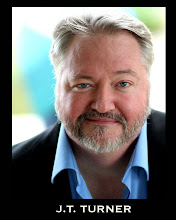
This blog serves to give acting ideas and advice to actors of all ages, especially young ones. This blogs author is J.T. Turner, actor, director, teacher and member of AEA, SAG and AFTRA. I hope you find the posts useful, and please pass along the blog address to anyone you think might benefit from it!
Showing posts with label actor. Show all posts

Thursday, March 29, 2012

Six Sensational Suggestions!

Base of a cherry tree with an blossoming epicormic shoot in a crevice of the trunkOh spring seems to be pushing it's way into our lives here in the Northeast. So perhaps a blog about some growth?

I often write in Advice To The Players about nurturing your creative side. Actor, singer, dancer, speaker, performer, whatever your creative call, we all need to stay in our creative zone as much as we can. With that in mind, how about some reminders on how to nurture the creative muse in you? Did you say, "Yes, please"? Good answer!

SIX SENSATIONAL SUGGESTIONS
(Oh JT, you are so alliterative!).

1) Keep a journal. Even spending just a few minutes a day jotting down thoughts and feelings can cause you to give birth to new ideas.

2) Read more. Studies tell us that high creative achievers read a lot. And try to have variety in what you read, lots of different genres.

3) Walk. Walking, even just a short fast walk, breaks your thinking patterns up, oxygenates your blood and keeps your thinking fresh.

4)Learn new things. Take classes, start a language course, learn a new game or instrument. The brain is a machine that thrives on being challenged.

5) Interact with people. Creative people are often portrayed as lonely brooding artists, but the opposite is true. Being a social creature introduces new thoughts, ideas and feelings into you life, and helps you stay creative and inspired.

6) Make something. Write a play or a new song, carve, sculpt, paint, sketch, plant, take pictures. Make a new thing to help your creativity sizzle.


And now, because I am so generous, a bonus item:

BREATHE! As stated in past blogs, make sure you take some good, deep cleansing breaths throughout the day. It does wonders for your brain.


Great ideas, but only great if employed! Use them!

JT


                                                The Actors Sensei
                                   Group lessons, and private coaching for all ages.

Sunday, October 16, 2011

Someone is watching


A few years ago, I was in a production of a musical in Boston. I was in the green room during a moment when I wasn't on stage and the actor next to me said, 'Oh X, (not her real name), must have people in the audience tonight". "How do you know?" I asked. "Oh she always cranks it up when she has friends out front".


I was a bit stunned at that, and it got me thinking about performance. Of course, when we know that family or friends are out front, we all tend to be a bit more excited and want to do our best. But as an actor, or singer or speaker, isn't the proper way to behave  giving your best ALWAYS? I think we have all seen actors that react to having someone special in the audience, a bit more fire, passion, a twinkle to the eye. But isn't the real challenge for us to keep that level of performance at each and every show? Of course there will be variation, of course some shows will turn out better than others, but that should be in hindsight, not a decision made before you go on!


Because the truth is that someone is always watching you. Someone always wants you to take them on a journey, to move them, to entertain them. When I teach young actors, I always remind them that they must treat each moment onstage as though someone is watching them, hanging on their every word, rooting for them. And that is good advice for all ages, to treat each show as though someone special is out there watching.


When I was on tour with a show years ago, I had a rough show. I was tired, my timing was off, and i just felt less than 100%. When the show was over and I was leaving, a parent wheeled a child up to me in a wheelchair, a child who obviously had a lot of physical challenges.From his wheelchair, the child told me, "You are my favorite actor". I was floored. I wanted to go back and redo the show, because I felt I had been under par. Yet my work had still touched this child.


 I never have forgotten that moment. I often replay it in my mind, to keep me going when I am feeling tired or off in some way. Going into the lights of a stage is a tremendous responsibility, and we don't know how many lives we can touch and change by our work.


So treat each performance as though someone special is watching. Because, someone is.


                                    THE ACTOR'S SENSEI

Monday, February 21, 2011

TODAY: TEN TIMELY TIPS

Hello loyal readers! Today at Advice to the Players, some fast tips for actors of all ages. Hope you will enjoy them. Several of these have been used as blog posts all their own, just check the site.
  • Act! All you can! Professional lessons are great, but, and I say this as an acting teacher, actual onstage time is better. Get all you can, especially in your early days.
  • Be a professional, even as an amateur. Show up on time, and ready to work. Script in hand if needed, pencil at the ready.
  • The script is your foundation. Learn your lines, then play with the underlying text.The sooner you can get them into memory, the sooner you can free up your brain to explore what you are saying.
  • BREATH! At least 15-20 minutes a day of proper breathing, especially on show days especially just before a show, will do wonders for you.
  • Save the drama for on stage. Avoid getting into backstage and offstage drama.
  • Try not to bad mouth fellow actors. It is a small business in many ways, and your words will come back to haunt you.
  • Remember to listen on stage. Focus, be an active listener, not just an actor waiting for a cue.
  • Try not to take rejection from a role as a personal comment/.You just don't fit into one persons vision. Move ahead to the next audition.
  • Show up. Life is filled with success, if you show up.
  • Be nice. To fellow actors, stagehands, techies, staff, audience everyone. It makes you a better actor and a better person.
Remember to become a follower here, or on our Facbook link, http://www.facebook.com/JTTurner#!/group.php?gid=220821066628


J.T. Turner
The Actors Sensei
Acting and Speech Lessons for all Ages
jtturneractor@gmail.com

Monday, January 17, 2011

Advice to the Players Goes to the Movies!


Yes I go to the movies and you should too. All performers should make it a habit to attend works within the arts, movies, plays, concerts  art shows and more. Often, as a professional actor, I am challenged with getting to shows, as often I am in one myself and don't get a chance to see friends at work. But this year, as a part of my goals, I am going to see more art. Plays and musicals, but movies as well.

As a member of the Screen Actors Guild, I am fortunate to get to see films that are nominated for the SAG awards held in late January. One of the perks of being a Union member is I see films that are up for awards. These are sent to me in a few ways, "screeners" which is an actual DVD of the movie, often long before it is out on DVD, downloads on iTunes, which is new this year but seems to be a trend, and something called "Movie Cash" which is a voucher to go see a movie in a theater for free. All this great access to amazing acting on film reminds me of my work, and inspires me in my work.

Black Swan Synopsis: Nina is aWatching other actors act, seeing the choices they make, looking at how they approach a role is a great lesson for actors. And it makes good fodder for future use. Watching Natalie Portman's amazing performance in Black Swan is riveting, and could be an object lesson for what madness looks like. Could you use that sometime, perhaps as Ophelia or as Queen Margaret? Can Colin Firth's take on King George VI's stammering, his insecurity, his internal struggle feed your portrayal of Willie Loman or Claudius?

When cast in a role, I often watch films that are set in the same time frame, or by the same author, or in the same country or with the same accents. I don't copy other performances, I let my own talents use them as a springboard to where my character may go. I draw this personal way of attacking a role from the great actor Antony Sher, who will watch films, TV shows, make sketches, read books and do research to flesh out his characters. (His book, Year of the King, is one I re-read each year).

So fire up that DVD player, get some popcorn, and feast! Oh and sometimes go to the movies, in a movie theater. It is different experiencing work in a communal setting, a ritual in itself.

See you at the flickers. :)


                     THE ACTORS SENSEI

Thursday, September 30, 2010

Pinky!

No, no not a post about your last finger. Even I am not that crazy.......well not today anyway. No, rather this is a personal post about an odd actory thing I often do when learning lines, and that is using my secret weapon.......the Pinky.
Pinky Ball


Yes, that pink colored rubber ball that many of us had as children. Ok maybe for some of you it is a toy your folks used, but still just refer to the photo. So I actual use this simple device when trying to learn lines, especially Shakespeare. But it helps with all lines from any genre. it can also be used for lyrics.


Now work with me here. When learning lines, I simply bounce the ball along with saying the lines aloud. This works great for Shakespearean verse since it is written in specific beats. a typical line of verse has 5 soft and 5 hard beats, alternating...da-DUM-da-DUM-da-DUM-da-DUM-da-DUM. That is a typical line, so I may bounce the ball down on the hard beats.


But this works for any lines. It has to do with distracting your mind, and slipping your lines into your brain in a structured way. It really helps if you have a word that is hard or that you have trouble remembering. Then I FIERCELY bounce the ball while calling out the word several times. By over emphasizing, exaggerating, and making a strong memory path, the word gets into your brain more dynamically, and that helps you with recall.


If I am working on a scene with a partner, we bounce the ball to each other after each one is done with a line. If I am getting help from someone reading, I may just bounce it on the floor after my line, listening to the next cue.


I find it also helps if I am walking or pacing as I bounce the pinky, again, saying the lines aloud. You may recall an earlier blog about memorization, using an MP3 or the like, and that method is still great. But I alternate it with Pinky work, as it is a bit more physical, and fun. :)


(Oh and in a total nerd rush, I use a different ball for each show, and write the show on character on it. Then after, give it away. )


J.T. Turner
The Actors Sensei

Thursday, July 29, 2010

Baby ears


I have had the great fortune and honor to work with some excellent directors over the years. They have inspired me to be a better director, and to be a better actor as well. Paul Daigneault runs Speakeasy Stage Company here in Boston, specializing in premiering plays to the Boston area. With Speakeasy I have been in such works as Johnny Guitar, Chess, Floyd Collins, and A New Brain. Paul is an amazing director, very low key and organic, and one of the lessons I have taken from him is about delivery.

Since Speakeasy specializes in new works, often an audience is hearing a show for the very first time. Paul always reminds his actors to think of the audience as having "baby ears", hearing sounds for the first time. As a result, an actor needs to be loud and clear. Even though you have worked on a piece for weeks or months, and know it inside out, that does not transfer to the audience. They are listening for the first time to you and your delivery. I am not saying make things slow and ponderous, just loud and clear.

I am currently working on the Scottish Play, and for many people Shakespeare is a realm that begs for this posts advice. The language, though gorgeous, is unfamiliar, so to let people take it in properly it must be heard! Enunciate, stay crisp, don't mumble, nor make your delivery so intimate that people lose what you are saying.


I will have more to say about volume in future blogs, but for this week Sensei says.... "Baby ears".


J.T. Turner
The Actors Sensei

Wednesday, February 10, 2010

Act your age

Todays blog is about a popular topic, auditioning. And I especially want to aim todays blog to younger actors as they pick audition pieces.

 One of the keys to selecting an audtion piece is to make it age appropriate. Many times though, I have had young performers show up at an audition with a piece that is just wrong for them. Let's say I am having an open casting call for a role in a Shakepearean play. I ask actors to come in with a classical piece prepared, preferrably from Shakespeare. A young girl, 12-14 years old, might be smart and come in  with a monologue  as Juliet. But if she shows up and does a monologue as the Nurse from Romeo and Juliet, I will just assume she doesn't know how to prepare a proper audition piece.

Let me be clear here, if you are a teen, and your school is putting on Guys and Dolls, then of course you choose a piece that reflects roles in that play. Teens often play older roles in school shows. but in a professional or community theater production, always try to have a piece that reflects your actual age. In college, as a 20 year old, I played a man in his 60's in a college production. In a legit theater, chances are they are going to look for someone actually near 60.

This is especially true when you are called in for film or commercial work. Having a piece ready that is appropriate for you is critical when you audition for those media. Casting directors want a person who looks 17 to play the role of the 17 year old. Of course, many people in their 20's might pass as a 17 year old, which is fine. But if a director needs a 50 year old, then it is silly for a 17-30 year old to show up, unless they have led a really rough life. Likewise, a parent should not bring a 10 year old to an audition where they need a toddler for a print ad. It wastes the directors time, your time, and the time of the other parents with actual toddlers.


A great step as an actor of any age is to know what range you can play. At my current age I can usually play roles from 45-70. That is a wide range, but I am a character actor. The range tends to widen a bit was we age. When I was 18, still as a character actor, I could play 18-28. Keep in mind that in many scripts and audition calls, a suggested age range is given, if you can play within that range, or feel you are close to it, go to the audition. But don't just "attend anyway" if you are dead wrong for the role. Bad and unlikely auditions are fun on American Idol, but maddening in real life.

So act your age!

J.T. TURNER
THE ACTOR'S SENSEI

ACTING LESSONS, PRESENTATION WORK, COACHING FOR ALL MEDIA.