Welcome!

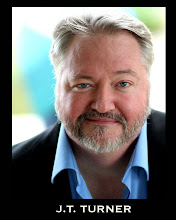
This blog serves to give acting ideas and advice to actors of all ages, especially young ones. This blogs author is J.T. Turner, actor, director, teacher and member of AEA, SAG and AFTRA. I hope you find the posts useful, and please pass along the blog address to anyone you think might benefit from it!
Showing posts with label memory. Show all posts

Wednesday, March 9, 2011

Memorizing by hand


We spend many blog posts here at Advice to the Players talking about memory. A good memory can help an actor immensely. Whether it be a monologue for an audition or memorizing lines for a performance, memory plays a major role in a successful acting career.

Today I want to mention a technique used by some actors to help them memorize. They simply hand write out the lines they are trying to memorize. Not a sophisticated method, in fact it is very low tech and simple, but many actors swear by this method.There seems to be a great connection between the physical act of writing out a part and memorizing it. Perhaps it is because we need extra concentration as we write, or because it requires multiple paths of your brain being used (sight, tactile).

No special equipment is needed, and your penmanship doesn't seem to make any difference. So try writing out the piece you are working on by hand. No typing please, handwriting seems to work best in the process. It also slows you down to concentrate on the work, and perhaps you will discover something in the line as you write it that you have not considered before.


J.T. TURNER
The Actors Sensei
Coaching in acting and speech for all ages, all media.

Thursday, September 30, 2010

Pinky!

No, no not a post about your last finger. Even I am not that crazy.......well not today anyway. No, rather this is a personal post about an odd actory thing I often do when learning lines, and that is using my secret weapon.......the Pinky.
Pinky Ball


Yes, that pink colored rubber ball that many of us had as children. Ok maybe for some of you it is a toy your folks used, but still just refer to the photo. So I actual use this simple device when trying to learn lines, especially Shakespeare. But it helps with all lines from any genre. it can also be used for lyrics.


Now work with me here. When learning lines, I simply bounce the ball along with saying the lines aloud. This works great for Shakespearean verse since it is written in specific beats. a typical line of verse has 5 soft and 5 hard beats, alternating...da-DUM-da-DUM-da-DUM-da-DUM-da-DUM. That is a typical line, so I may bounce the ball down on the hard beats.


But this works for any lines. It has to do with distracting your mind, and slipping your lines into your brain in a structured way. It really helps if you have a word that is hard or that you have trouble remembering. Then I FIERCELY bounce the ball while calling out the word several times. By over emphasizing, exaggerating, and making a strong memory path, the word gets into your brain more dynamically, and that helps you with recall.


If I am working on a scene with a partner, we bounce the ball to each other after each one is done with a line. If I am getting help from someone reading, I may just bounce it on the floor after my line, listening to the next cue.


I find it also helps if I am walking or pacing as I bounce the pinky, again, saying the lines aloud. You may recall an earlier blog about memorization, using an MP3 or the like, and that method is still great. But I alternate it with Pinky work, as it is a bit more physical, and fun. :)


(Oh and in a total nerd rush, I use a different ball for each show, and write the show on character on it. Then after, give it away. )


J.T. Turner
The Actors Sensei

Thursday, January 28, 2010

Oh you tease!


 Ok I left my last blog as a cliffhanger, like a 1930's weekly serial. When last we visited the Actor's Sensei, he was teaching his minions a great method of memorizing lines. But for many actors and speakers, there is an odd occurance. Every time you try to say your lines, you get stuck at exactly the same spot. Time and time again. This is usually the scene...

"To be or.....oh, man what is next? C'mon, I know this, I just looked at it......To be or...argggh! (Looks at script). NOT TO BE, NOT TO BE! I know this oh man seriously, am I a loser or what? To be or not to be...sheesh!  To be or not to be.........OK, here we go. To be or ........no way! Again? Seriously? I am a total failure!".

OK deep breath, we will get through this. First a quick word about why this happens, without getting too technical. When you create a memory, memorize something, you basically create a path in your brain. When you go to recall something, you go down the same path to find it. If you memorize it poorly, don't pay attention, it is hard to find the memory again. And if it is mislearned the first time, or poorly learned, then that is what gets in the way of recalling the line or memory.

Imagine walking down a memory path. At one point as you walk along, a giant monster leaps out and yells, "FORGET!". Unless you adjust, then every time you go down that path, that monster is still there.That's why we forget the same line over and over, or get to one part of our speech for a Rotary Club and go blank. The same spot, because we have taught ourselves to go blank there.


Now some actors do the totally wrong thing. Somewhere along the line, someone told them that negative  reinforcement when you forget something helps. So when they forget, they yell at themselves, jump up and down, curse, snap their fingers and try  in general to create an unpleasant moment so they won't repeat the mistake. THIS DOES NOT WORK.

In fact it just reinforces the forgetful moment, as you are making a new, bold memory around it. Its like the Forget Monster jumps out, you buy it dinner and take it to a movie. So first rule, when you get stuck, don't berate yourself. Just correct and go on if you can.If you are at a rehearsal and forget a line, just ask for it, without a 20 minute scene of apology.

So how to correct? When memorizing, go back to a bit before the spot you have gone wrong, and try running that section 5 times quickly the right way, looking at the lines. 5 times, no fewer. Still a problem? Create a mental image that will help you for that section. If I always forget "...not to be.", then I create a silly mental picture. 2 bumblebees with a big X through them. When I get stuck, I leave the old path of memory, and instead picture.....NOT 2 BEE. Goofy? yes, but goofy visuals work, they create strong memories.

Here is a personal example. I tour doing a show about William Shakespeare called Shakespeare's Ghost. It's a one man show, so it it just me talking for an hour and a half, complete with 20 or so soliloquies from Shakespeare. In rehearsal I always went blank at the same spot, a transition from talking about the death of Shakespeare's son to talking about John Barrymore playing Hamlet. Every time I got there, I forgot what came next. So I repaired it in my mind, by picturing Shakespeare standing at his son's grave, and a drunken John Barrymore staggering up to console him. Odd picture, and yet it worked, I never lost that transition again.

Try forming a new memory for those tough lines. The stronger and odder the visual picture you can conjur up, the better the replaced memory will be. It truly can work!


J.T. Turner
The Actor's Sensei

Coaching and classes available for all ages, contact me at jtactor@aol.com


(Thanks to Mary Rodgers for the photo).

Monday, January 25, 2010

I forget what this is about....


Memory - all alone in the moonlight.

I can smile at the old days,
I was beautiful then.
I remember the time I knew what happiness was.
Let the memory live again.-Cats

Ok not my favorite musical but a good launching point for a discussion of...memory!

I don't just work with actors, but with public speakers and presenters, seminar leaders and teachers. All of those people often run into a challenge, memorization. Yes, a speaker can often use notes, but should never just read a speech, parts of it should be memorized so that the audience gets to see those great eyes of yours. (Recall my past blog on eye contact. What? Don't remember it? Boy is this blog for you....).

Actors and speakers need a good memory. Sadly as we age the ability to memorize becomes more of a challenge. And I know many young actors who have trouble memorizing lines. Today I will take one of the tips I give in my Memory seminar, entitled The Palace of Memory, and share them with you. It is quite simply the fastest way to learn lines or memorize a speech.

First record the speech.Use an MP3, make a file on your computer, use a voice recorder or if you are technically challenged use a cassette player.Record your lines, as well as the cue lines that you hear before them, (you may want to use a slightly different voice for the cue lines, just speaking them more softly than your own lines works). If it's a monologue or speech, naturally just record the entire piece in one voice.

Now, listen to the recording, as you read the words, aloud, from the script. Do not test or memorize yet, just read aloud as you listen to the recording. This simple step will make memorization up to 70 times faster than other methods. This is because no matter what style of learner you are (oh look, a future blog topic!), this method works. The information you want to memorize is now being learned visually as you read the words, kinesthetically as you speak the words, and audibly as you listen to them. The words are getting into your brain 3 ways at once, and will make the piece stick faster. After doing this several times, (incrementally, if you can, do it 2 times in the morning and 2 times in the evening for several days), try to do it without the recording playing, and only look at the script when stuck. And after a few times without the recording, you will find you can do it without the written text needed as a crutch.

Fast, easy and it works, like all good tips should. But sometimes in a speech or when playing a role, some parts are messed up or forgotten, time and again. What can you do about "trouble" spots? Every time you practice the same part is fouled up, what to do?

Easy! Just read my next blog.


J.T. Turner
The Actor's Sensei

Coaching and acting classes available! jtactor@aol.com


(Thanks to Mary Rodgers for the photo).